
A convincing sports card can look right for a few seconds. That is exactly why a careful buyer slows the moment down. The goal is not to become an expert on every set overnight. It is to notice when the card, the listing, and the seller’s story do not support each other, then choose a safer next step.
Counterfeit concerns are not a reason to avoid the hobby. They are a reason to build a repeatable buying habit. Start with good photos, compare the exact card to reliable references, inspect any claimed grading holder, and keep enough records to explain what you bought. A small pause before payment can prevent a much larger problem later.
1. Begin With the Exact Card, Not the Headline
Before studying print or plastic, identify what the seller says the card is. Write down the player, year, manufacturer, set, card number, version, parallel, autograph or memorabilia claim, and grade if there is one. A title that says “rare rookie” is not an identification. You need details you can compare.
Look for a known reference from the same issue. That may be a trusted hobby catalogue, a clear image from an established seller, or a card already in your collection. Compare the front and back, not just the athlete photo. Check the card number, copyright line, borders, logos, foil pattern, and the placement of small printed details. A close match does not prove authenticity, but a meaningful mismatch is a reason to stop.
Keep the comparison fair. Different print runs, eras, and card conditions can look different. A card with normal age, off-centering, or a soft corner is not automatically fake. The useful question is whether its details make sense for that exact issue. If you cannot identify the card confidently, treat that uncertainty as part of the buying decision.

2. Ask for Photos That Let You Inspect, Not Just Admire
A listing should make it possible to see what is being sold. Ask for a sharp, straight-on image of the front and back, plus close photos of corners, edges, and any surface area that matters. For a card in a holder, request images of the full holder, its label, and its seams. A seller who cannot provide reasonable photos may have an innocent explanation, but you do not need to solve that mystery with your money.
Look for print that appears unusually soft, blotchy, or poorly aligned, especially around fine text, borders, and logos. Check whether colours, foil, and texture resemble reliable examples. Card stock that seems unusually thin, glossy, or flimsy can also deserve a closer look. These are warning signs, not final verdicts. Photography, lighting, wear, and manufacturing differences can all change how a card appears on screen.
Use photos to compare details, not to convince yourself that a deal is real because it looks exciting. The practical test is simple: do the images reduce your questions, or create more of them? When a seller only provides distant, filtered, or reused photos, move on or ask for better evidence.
3. Read the Listing Like a Record
A trustworthy listing gives the card a coherent identity. The title, description, photos, grade, certification number, and price should point to the same item. Watch for vague phrases that avoid specifics, a description that does not match the photo, or a very valuable card described with less care than an ordinary one.
Check the seller’s history in context. A long account history alone is not proof, but a pattern of clear photos, accurate descriptions, and consistent collectible sales can be more reassuring than an account with little traceable activity. Read recent feedback for issues involving condition, returns, or items that differed from the listing. Do not assume a high score makes every individual card safe.
Price is another clue, not a shortcut. A deal far below realistic recent sales may be a chance to ask why, not a reason to rush. Use XPR VIP’s sports card value guide to compare the right year, set, version, condition, and grade. An asking price is only an invitation. A recent completed sale is stronger evidence of what collectors actually paid.
4. Verify a Graded Card From More Than One Angle
A graded holder can add useful information, but it should not switch off your judgment. Start by comparing the card in the holder with the label: player, year, set, card number, grade, and any designation should all line up. Then examine the holder itself. Look for damage, tampering, an odd fit, or a label that appears inconsistent with known examples.
Use the grading company’s own verification tool when it offers one. PSA explains in its buyer security guide that collectors can use certification verification to check a number. It also warns that criminals may use real certification numbers on counterfeit inserts, so a matching number alone is not enough. Compare the returned record with the exact card, label, and holder in front of you.
If a seller will not show the certification number or close holder photos, treat that as a reason to pause. If the card is expensive enough to change your budget, it is worth choosing a buying route with inspection, return protection, or professional support. A quick check is not distrustful. It is part of buying a collectible responsibly.

5. Use the Safest Buying Route Available
For a higher-value purchase, your buying process matters as much as your eye. Prefer payment methods and marketplaces with meaningful buyer protection. Read the return terms before payment, not after an item arrives. Keep the listing, messages, invoice, tracking details, and unboxing photos in one place if the card matters enough to dispute.
On eligible eBay trading-card purchases, the Authenticity Guarantee process sends the card for third-party inspection before it reaches the buyer. The current programme applies to eligible individual cards, and it is not the same as a new grade or a promise that every card on the marketplace qualifies. Read the listing badge and current programme rules rather than assuming it applies.
For a local deal or a card outside an inspection programme, choose a public meeting place when sensible and give yourself room to inspect. Do not let a countdown, a message saying someone else is waiting, or a supposedly once-in-a-lifetime price remove your ability to compare the card. A real opportunity will survive a careful question.
6. Separate a Warning Sign From a Verdict
Collectors get into trouble when they turn one observation into certainty. A fuzzy photo, an unusual colour, a crooked label, or a seller who seems rushed can all justify more questions. None of those details, on its own, proves that a card is counterfeit. Manufacturing changes, poor listing photos, worn vintage stock, and honest mistakes happen too.
Use a simple three-part decision: proceed when the details match and the purchase route protects you, pause when something needs clearer evidence, and walk away when the story keeps changing. This keeps the decision practical. You are not trying to win an argument about a listing. You are deciding whether the evidence is good enough for your money and your collection.
When you pause, ask one focused question at a time. Request the card back, the serial number, a close image of a corner, or a photo of the full holder. Notice whether the answer makes the card easier to understand. A helpful seller will not always have every answer, but the information they provide should make the item more coherent, not more confusing.
7. Document What You Buy
Save clean front-and-back photos, the listing, the seller name, purchase date, price, and any certification number. For an important card, photograph the package before opening and the card when it arrives. This is not busywork. It helps you recognise the exact item, support a return or claim if needed, and maintain a useful collection record.
Put the card into the same system you use for the rest of your collection. Note where it is stored, what you paid, and any questions that remain. A simple collection tracker makes it easier to connect a card with its paperwork, images, condition notes, and location. XPR VIP’s collection tracker guide shows the fields worth keeping without turning the hobby into a full-time data project.
Do not alter a card you are questioning. Avoid cleaning, trimming, peeling, pressing, or trying to repair it before you understand what you have. Those changes can damage the card, weaken a claim, or make professional evaluation harder. Preserve the evidence first.
8. Know When to Stop and Ask for Help
Some questions cannot be settled with a phone photo and a magnifier. Stop when the value is meaningful to you, the card has conflicting details, the holder does not match the verification result, or the seller pressures you to skip normal checks. That is the moment for professional authentication, a recognised dealer, or a marketplace process that gives an independent party a chance to inspect the item.
Authenticity and condition are separate questions. A genuine card can still have trimming, restoration, recolouring, surface damage, or a grade that does not meet your expectations. Be clear about what you are asking an expert to evaluate, then review the current service terms, cost, and turnaround before sending a card anywhere.
Once you do buy confidently, protect the card. Use the sports card storage guide for sleeves, holders, boxes, and stable conditions. Proper storage will not prove a card is real, but it will help you keep a genuine card and its supporting records in good condition.

Build a Habit That Works at Any Budget
The most useful authenticity habit is the same for a $10 card and a landmark purchase: identify it, compare it, check the buying route, and keep the record. The amount you spend changes how much time and outside help make sense, but it should not remove the basic routine.
For lower-cost cards, a quick comparison, clear listing photos, and a sensible payment method may be enough. For cards with larger financial or personal value, add certification checks, stronger purchase protection, a return path, and professional help where it is available. The point is not to make every purchase stressful. It is to make your confidence proportionate to the risk.
How XPR VIP Fits Into the Story
Collecting should make a sports story feel closer, not leave you second-guessing every purchase. XPR VIP’s collector guides are built around the practical habits that help fans care for what they own, from judging a card’s value to keeping it organised and protected.
You can explore XPR VIP’s collectibles direction, read the site’s collector reference facts, or get launch updates for future announcements.
Before You Buy
A Quick Card Authenticity Checklist
- Identify the exact year, set, card number, version, and claimed grade.
- Compare front, back, borders, and small print with a reliable example.
- Ask for clear photos of the card, holder, label, and edges.
- Check that listing details, photos, and price tell the same story.
- Use the grading company’s own verification tool when a certification number is present.
- Choose buyer protection or independent inspection for meaningful purchases.
- Save the listing, receipt, photos, and delivery details with your collection record.
Frequently Asked Questions
Checking a Sports Card Before You Buy
Can I tell if a sports card is fake from one online photo?
Sometimes a photo reveals a clear problem, but one image is rarely enough to prove a card is genuine. Ask for sharp front, back, edge, and corner photos, then compare them with known examples. If the purchase matters, use a marketplace protection program or professional authentication rather than relying on a single picture.
Does a PSA certification number prove a slab is real?
It is an important first check, not a complete answer by itself. PSA notes that counterfeit inserts can use real certification numbers taken from public sources. Compare the result, card, label, and holder carefully, and contact the grading company or use its established support path if anything does not line up.
Should I buy an expensive raw sports card?
It can be reasonable when the seller, photos, return terms, and purchase protection give you confidence. Slow down on any raw card whose value would be painful to lose. Ask for more evidence, compare it with reliable examples, and prefer an inspection or authentication route when one is available.
What should I do if I think I bought a fake sports card?
Keep the listing, messages, receipt, shipping materials, and clear photos together. Follow the marketplace or payment provider’s dispute process promptly, then contact the grading company or authenticator named on the card if that is relevant. Do not alter, clean, or try to repair the card before you understand your options.
Keep Reading
Related Posts

Sports Card Collection Tracker: What to Record
A simple way to record the details, costs, condition, and location that make a card collection easier to enjoy and manage.
Read The Guide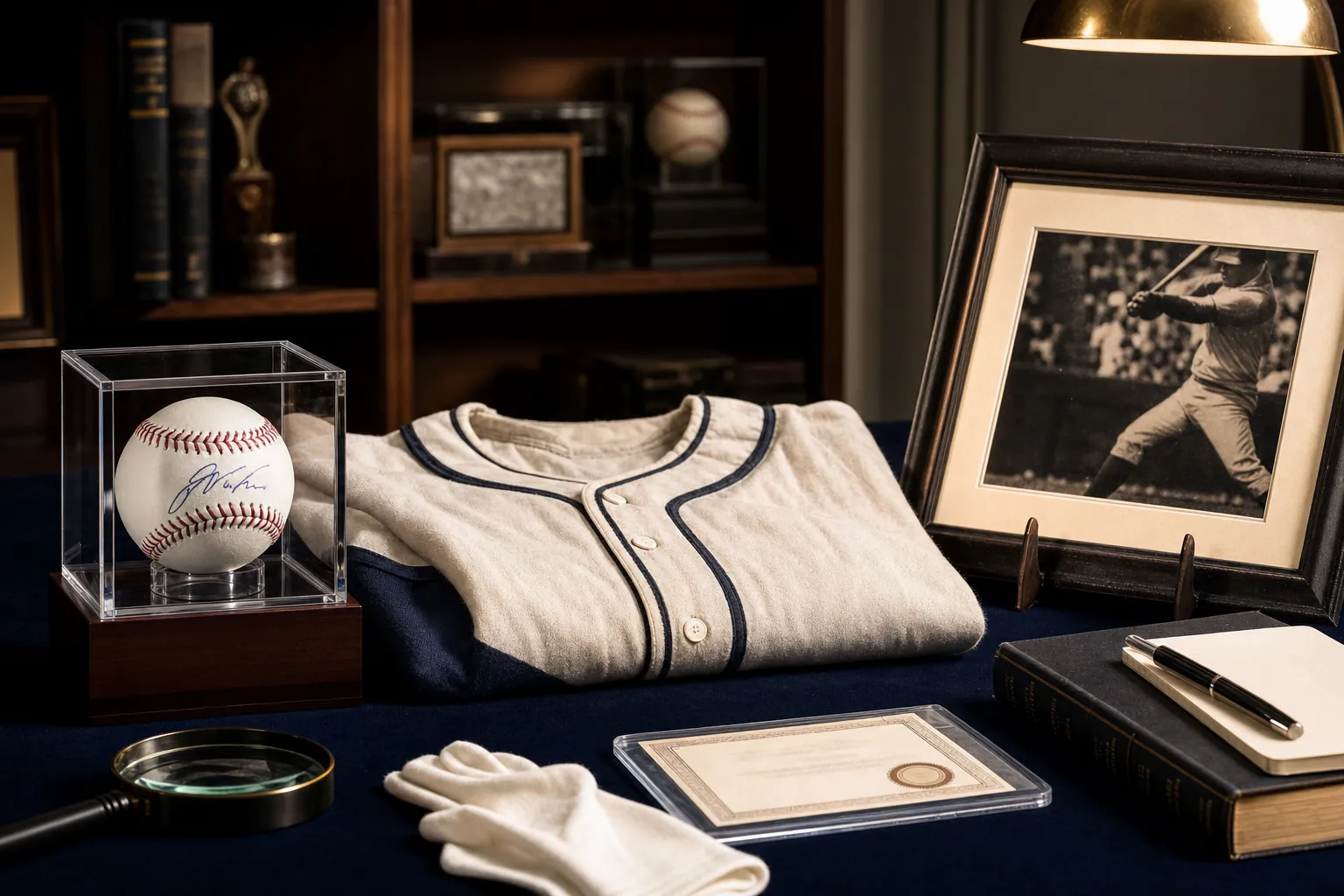
Sports Memorabilia Authentication: What to Check Before You Buy
A practical guide to provenance, certification, and smart questions that help collectors buy sports memorabilia with more confidence.
Read The Guide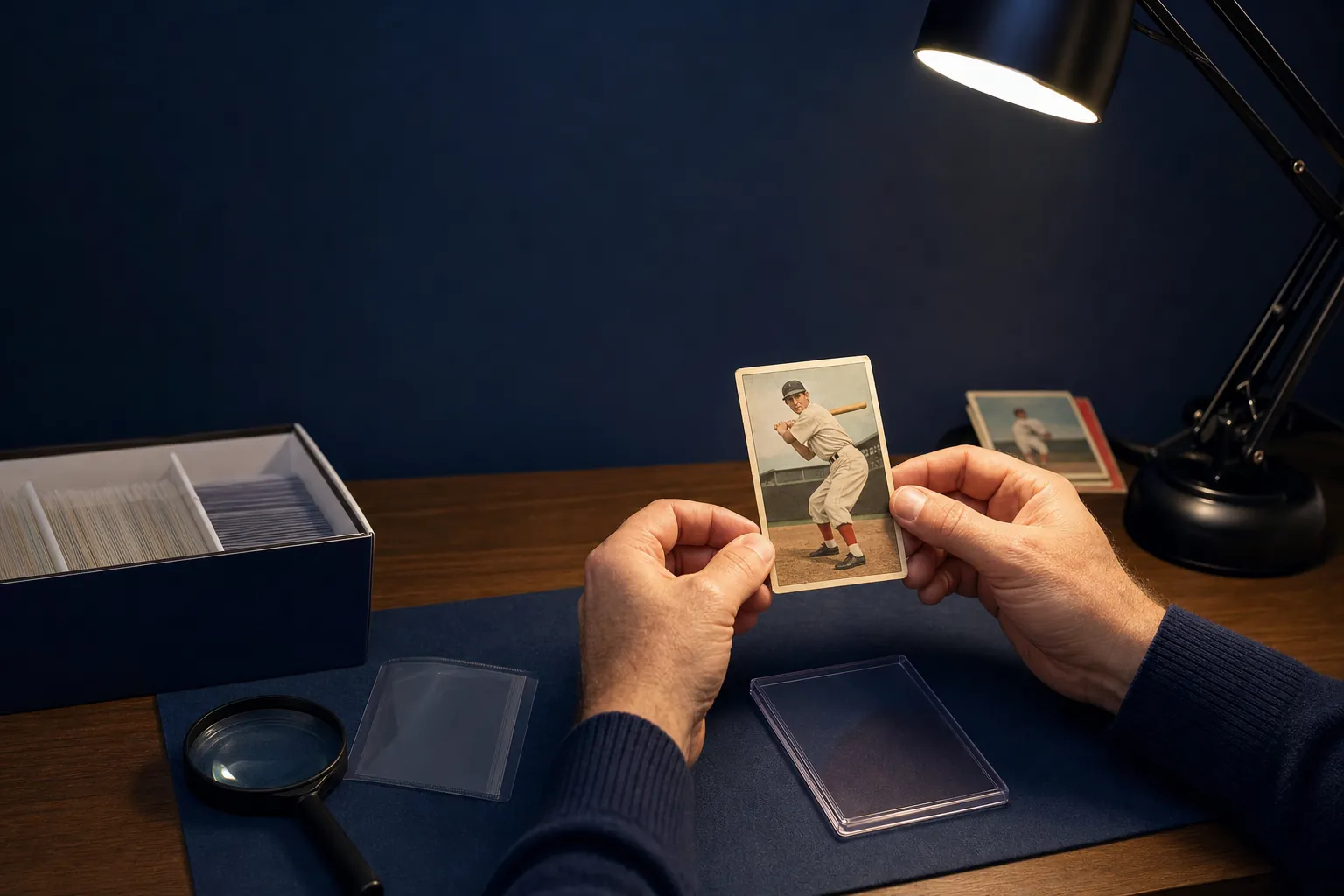
How to Get Cards Graded: A Collector’s Step-by-Step Guide
A clear way to decide which cards to grade, prepare a careful submission, and protect your collection before it ships.
Read The Guide
How to Ship Sports Cards Safely: A Collector’s Guide
A clear way to protect cards, pack a stable box, choose sensible shipping, and keep the records that matter.
Read The Guide