
A sports card is worth what a real buyer is willing to pay for that exact card in that condition at that moment. That answer is less dramatic than a headline price, but it is the one that helps a collector make a sound decision. Before you buy, sell, insure, trade, or send a card for grading, slow down long enough to identify it clearly and compare it fairly.
Valuing sports cards is not a single lookup. It is a short process: confirm what the card is, look closely at its condition, find recent comparable sales, and turn those sales into a sensible range. The process works for a childhood favorite, a modern parallel, a signed card, or a card you are thinking about selling. It also keeps one exciting listing from making you believe every similar card is worth the same amount.
1. Identify the Exact Card Before You Price It
Start with the details printed on the card and its holder, not the player’s name alone. Record the year, brand, set, card number, player, team, and any version detail. A card can be a base issue, rookie card, insert, parallel, short print, autograph, memorabilia card, serial-numbered card, or reprint. Those distinctions can lead to very different results even when the front image looks nearly identical.
Turn the card over and note the card number. Read the small print around a parallel or serial number. If the card is in a professional holder, record the company and grade exactly as shown. A listing that says only “star player card” leaves too much uncertainty to compare it with a recent sale. The better your description, the better your research will be.
When an autograph, game-used claim, or certificate affects the price, ask whether the proof connects to the exact card or item. XPR VIP’s sports memorabilia authentication guide explains why a label or certificate is most useful when it can be verified and tied to the piece in front of you.
2. Judge Condition With a Clear Eye
Condition is often the biggest reason two copies of the same card sell differently. Compare corners, edges, surface, centering, print marks, creases, stains, scratches, and any wear around the border. Good light helps. So does putting the card on a clean, flat surface and handling it by the edges. You are not trying to prove that a favorite card is perfect. You are trying to describe what is really there.
Look at the front and back. A card can have an appealing front image but show whitening, chipping, staining, or a soft corner on the back. A small flaw does not make a card worthless. It simply changes which sold examples are appropriate to use. A raw card with visible wear should not be valued against a sharp, professionally graded copy just because both share the same year and card number.

Keep a card protected while you inspect it. A clean soft sleeve and a holder that fits properly reduce the risk of creating a new problem during research. The sports card storage guide covers practical protection for raw cards, graded cards, binders, and boxes. If you are considering a submission, read the card grading guide first. A grade can be useful context, but it is not a substitute for understanding condition yourself.
3. Use Recent Completed Sales, Not Hopeful Listings
Completed sales show what a buyer actually paid. Current listings show what a seller would like to receive. That makes completed sales the better starting point for most collector research. Search using the year, player, set, card number, variation, and grade or condition. Then remove results that do not match the card in your hand.
For an easy first check, eBay’s sports card price guide offers price and market data for scanned cards. Price-guide sites can be helpful too, particularly when you use them as a way to find comparable versions rather than treating one displayed number as a final answer. The important work is still the comparison: same card, same version, similar condition, and similar timing.
Build a short list of sales instead of stopping at the highest one. Three to ten close examples can show whether a result was typical, unusually strong, or unusually weak. A high sale may include an exceptional grade, a scarce parallel, a timing advantage, or two determined bidders. A low sale may involve poor photos, an unclear title, a damaged card, or a seller who accepted a quick offer.

Ignore sales that are not truly comparable. A raw card is not the same as a mint graded card. A numbered parallel is not the same as a base card. A card with a verified autograph should not be grouped with a similar unsigned version. Make notes about why you included or excluded each example. That small discipline is what turns scattered listings into a useful value range.
Pay attention to the sale date as well. A result from several years ago may be interesting history, but it may not describe today’s demand. When recent sales are thin, widen the time frame carefully and say so in your notes. You can also compare the nearest version of the card, but keep it separate from the final range. A closely related parallel may help you understand the set, yet it cannot establish the value of a different serial number or print run on its own.
4. Turn the Sales Into a Useful Range
Once you have a handful of close sales, look for the middle of the range. If similar cards sold for $24, $27, $31, and $29, a sensible working range may be around the high twenties, not the highest number you found. If one result is far outside the others, find out why before allowing it to set your expectation.
Use a range because the market is not fixed. A card can bring a little more when the player is in the news, a collector is building the same set, or the listing reaches the right audience. It can bring less when demand is quiet, the listing is rushed, or the seller needs a quick sale. A range gives you room to decide whether you are buying, holding, trading, or selling without pretending there is one permanent number.
For a card you plan to sell, choose the range that matches your goal. A faster sale may mean pricing near the lower end of recent, comparable results. A patient listing may justify aiming nearer the middle or upper end when the card is cleanly presented. The sports card selling guide can help you match the listing, photographs, and selling method to the kind of card you have.
For a card you are considering buying, use the same range to set a limit before the moment gets exciting. Decide what the card is worth to you, including shipping, tax, grading uncertainty, and the condition you can actually see. A fair sale is not always the absolute lowest price. It is a purchase you understand, for a card you are happy to keep, at a number that fits your budget and collecting goals.
5. Know What Usually Moves the Number
Rarity, condition, demand, and trust matter more than a dramatic description. A serial number can matter, but only if collectors care about that card and version. A rookie card can matter, but the year, set, scarcity, grade, and player demand still shape the outcome. An autograph can matter, but buyers will look at the signer, the authentication, the card itself, and the quality of the signature.
Timing matters too. A strong game, award, playoff run, retirement, or Hall of Fame news can bring attention to a player. That attention may be temporary. A sudden jump in asking prices is not proof that the market has moved. Look for completed sales over more than a day or two and let the results settle before making a large decision.
Do not overlook presentation. Clean front-and-back photographs, an accurate title, and honest condition notes make it easier for a buyer to understand what they are considering. When the card leaves your hands, the same care should carry into packing and tracking. Use XPR VIP’s sports card shipping guide for a safer shipping routine.
6. Keep a Small Record of Key Cards
For cards that would be difficult to replace, write down the exact card details, condition notes, where it is stored, and the sales you used to form your range. Take clear front-and-back photos. Add the grade and certification number when a holder has one. You do not need a full spreadsheet for every common card. Start with the cards you would be disappointed to lose, damage, or forget about.

A notebook, spreadsheet, or collection app can work. The best method is the one you will update after a purchase, trade, grading return, or sale. XPR VIP’s card organization guide can help you create a system that connects each important card with a sensible storage location. Keep your notes separate from the cards themselves so they remain useful after a move, accident, or sale.
7. Avoid the Most Common Value Mistakes
Do not price a card from a single asking price, a headline sale, or a vague listing title. Do not assume every card from a famous player is valuable. Do not compare a raw card to a pristine high-grade example. Do not rush a grading submission just because the card seems expensive online. Each shortcut creates a bigger chance of paying too much or setting a selling expectation that the market does not support.
Instead, identify the card, inspect it honestly, compare recent sales, and use a range. When a card is unclear, pause. Ask for better photos, research the set, or keep collecting information. That is not missed opportunity. It is how you protect the money and attention you put into the hobby.
There is also nothing wrong with valuing a card differently from the market. A card from a first game with a parent, a favorite player, or a childhood set can have personal value that no completed sale can measure. Keep that distinction clear. Market value helps with buying, selling, trading, and protection. Personal value helps you decide what belongs in your collection even when the numbers move.
How XPR VIP Fits Into the Story
At XPR VIP, collectibles are part of the stories fans want to keep close. Understanding how to value a card helps you make better decisions about the pieces you buy, protect, trade, sell, and hold onto for the long term.
You can explore XPR VIP’s collectibles direction, read the site’s current collector reference facts, or get launch updates for future fan experiences and announcements.
Before You Decide
A Quick Sports Card Value Checklist
- Record the year, brand, set, card number, version, and grade or condition.
- Inspect the front and back for centering, corners, edges, surface wear, and other flaws.
- Search recent completed sales using the exact card details.
- Remove results that do not match the version or condition of your card.
- Use several close examples instead of one unusually high or low result.
- Set a range that matches your goal, not a single permanent number.
- Save photos, notes, and sales references for cards that matter most.
Frequently Asked Questions
Understanding Card Values
How can I find out what my sports cards are worth?
Identify the exact card first, including the year, set, card number, variation, grade or condition, then compare recent completed sales of truly similar cards. Use more than one sale when possible and give more weight to the examples that match your card most closely.
Are asking prices a good way to value sports cards?
No. An asking price shows what a seller hopes to receive, not what a buyer has actually paid. Completed sales are more useful because they show where a real transaction happened, though you still need to compare the same version and condition.
Does grading always make a sports card more valuable?
No. A professional grade can add trust and make condition easier to compare, but grading costs money and does not change the player, rarity, demand, or the condition already present. A low grade can also confirm flaws that buyers would have noticed in a raw card.
Why do two cards of the same player sell for different amounts?
The year, brand, set, card number, parallel, autograph or memorabilia detail, serial numbering, condition, grade, timing, and the number of interested buyers can all change the result. A player name alone is not enough to establish a useful value.
Keep Reading
Related Posts

How to Store Sports Cards: A Collector’s Guide
A practical way to choose card protection, build a stable storage setup, and keep a collection organized for the long term.
Read The Guide
How to Organize Sports Cards: A Collector’s Guide
A clear system for sorting, labeling, and tracking sports cards so a collection stays easy to find, protect, and enjoy.
Read The Guide
How to Sell Sports Cards: A Practical Collector’s Guide
A clear way to choose what to sell, set fair expectations, present cards honestly, and pack each shipment with care.
Read The Guide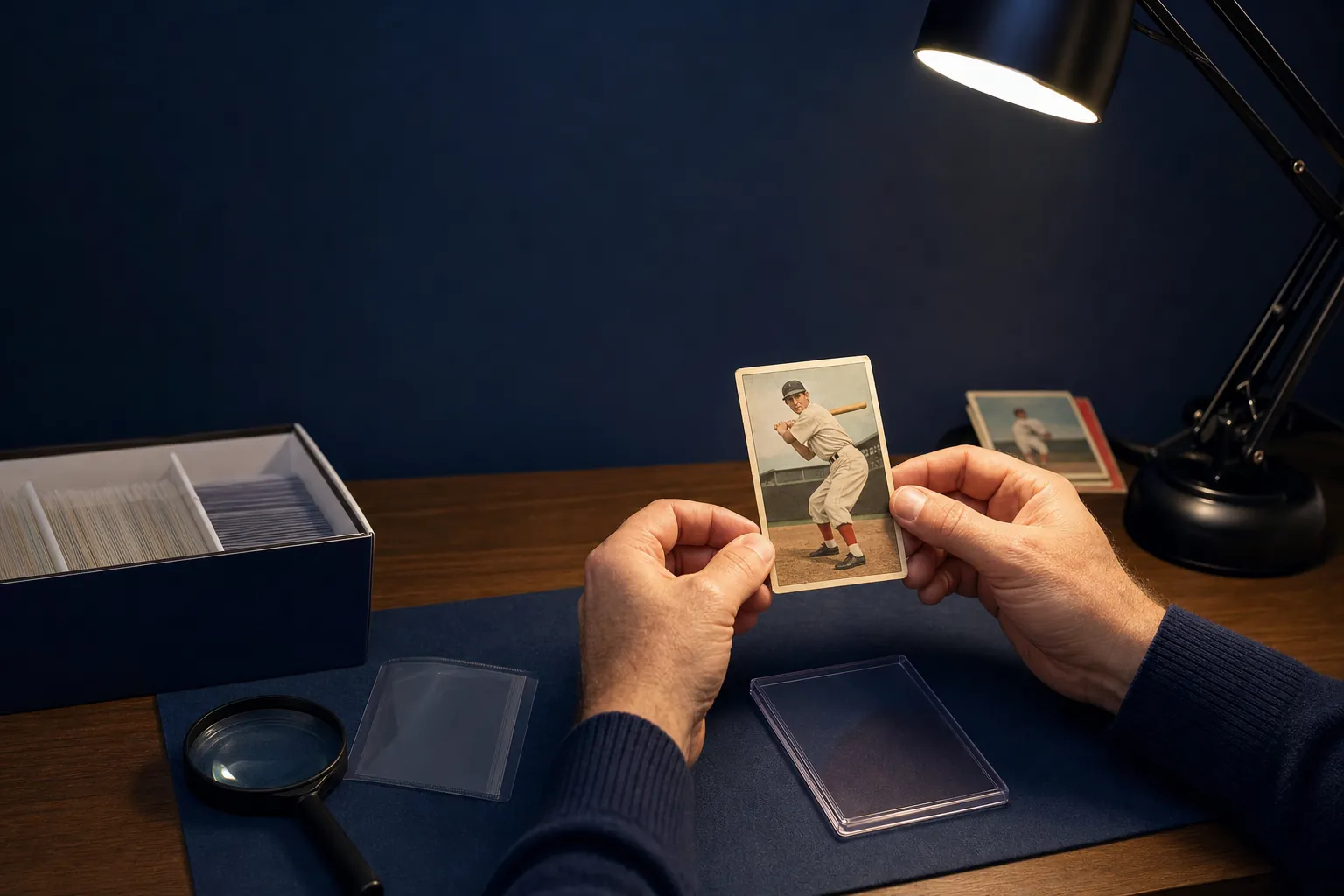
Sports Card Collecting for Beginners: Where to Start
A practical first path for choosing what to collect, buying carefully, protecting cards, and enjoying the hobby on your own terms.
Read The Guide