
A sports card collection tracker is not about turning every card into a price tag. It is about making your collection easier to understand. When you can identify a card, find it quickly, remember what you paid, and see the notes that matter, you make calmer decisions about what to keep, protect, grade, trade, or sell.
The best tracker is not necessarily the fanciest one. A simple notebook can beat an app you never open, and a short spreadsheet can beat a pile of screenshots with no context. Start with the cards that matter most, use fields you can keep current, and build from there. A useful record should make collecting more enjoyable, not turn it into homework.
1. Start With the Job Your Tracker Needs to Do
Before choosing a tool, decide what you need to find out. A set builder may want to see missing card numbers. A player collector may want every version of one athlete together. Someone who buys and sells more often may care about cost, fees, sale history, and where each card is stored. A collector with a handful of favorites may only need photos and a reliable location note.
Write down the first question you want your tracker to answer. It might be “Do I already own this card?”, “Which cards are in this box?”, “What did I pay for this?”, or “Which cards deserve better protection?” That question tells you which details are worth recording. Trying to collect every possible field from day one is how a good idea becomes a project you avoid.
Give your collection a few broad groups before you chase detail. Personal favorites, set builds, cards waiting for grading, trade stock, and cards you may sell all have different jobs. XPR VIP’s sports card organization guide can help you choose an order that feels natural when you look for a card later.
2. Record the Details That Identify the Exact Card
A player name is rarely enough. The same player can appear on base cards, inserts, rookies, parallels, autographs, relic cards, reprints, and numbered versions that look close at a glance but are not interchangeable. A useful tracker makes the distinction clear before you research value or decide how to protect the card.
For each key card, record the year, manufacturer, set, player, card number, and version or parallel. Add a serial number when the card has one. If it is graded, include the grading company, grade, and certification number exactly as they appear on the holder. For an autograph or memorabilia claim, note what supports it. The memorabilia authentication guide explains why documentation is strongest when it connects directly to the item you own.
Take clear photos of the front and back for cards you would be disappointed to lose, damage, or misidentify. Photos support the written record. They can help you remember a condition detail, compare a card before buying a duplicate, or explain a piece when you trade or sell it. They do not need studio lighting. Straight, well-lit pictures against a plain surface are enough.

3. Keep the Condition Notes Honest and Simple
You do not need to predict an exact professional grade. You do need enough honesty to avoid comparing a worn raw card with a sharp graded copy later. Use a few useful notes: clean, light corner wear, surface line, soft edge, crease, off-center, or unreviewed. Record both the front and back when either one has an issue.
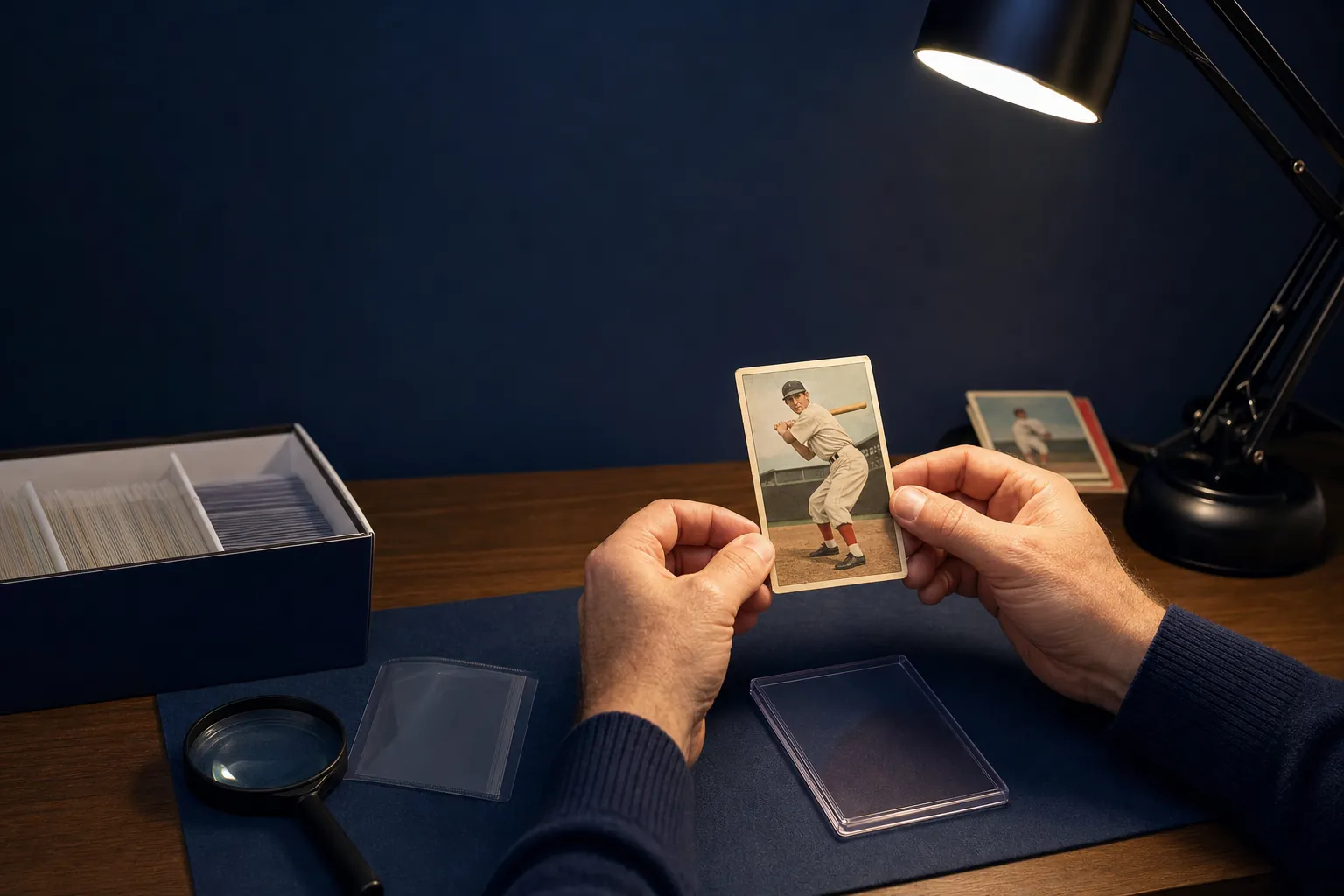
Handle cards by the edges while you inspect them, and keep the inspection space clean and dry. A magnifier and good indirect light can help you see surface lines, print marks, or small dents. The goal is not to find a reason to dislike a card. It is to describe the card you actually have so you can choose the right comparable sales, storage, or next step.
If a card might go to a grader, keep your tracker note separate from the professional result. A card can be a good candidate for preservation, authentication, or easier resale even when you do not expect a top grade. XPR VIP’s card grading guide walks through the inspection, submission, and cost questions worth considering first.

4. Give Every Important Card a Location
A card record is only half the job if it still leaves you opening every box. Add a location that matches your real setup: binder name and page, box name and divider, drawer, display case, slab box, or safe-storage container. Use a simple naming system you can read quickly, such as “Baseball Box 2, Yankees divider” or “Blue binder, page 14.”
Label the outside of boxes and binders to match the tracker. This sounds obvious, but it prevents the most common collection-record failure: a neat list that points to a stack of nearly identical, unmarked containers. When you move a card, change the location right away. A tracker only needs to be accurate enough to save time, not elaborate enough to impress anyone.
Match the location to the card’s protection needs. Raw cards, thicker cards, autographs, and slabs do not all fit the same storage arrangement. The sports card storage guide covers sleeves, holders, binders, boxes, and stable conditions so your record and your physical collection work together.
5. Track What You Paid, Not Just What You Hope It Is Worth
For cards you buy, trade for, or plan to sell, record the date and what the card actually cost you. Include shipping, tax, grading fees, or trade value when those details matter to the decision. A card that cost $60 is not a $60 acquisition if it also carried $8 in tax, $6 in shipping, and a future grading bill. The more active you are, the more useful that context becomes.
Do not feel pressure to assign a current value to every card. Start with the ones you would insure, grade, sell, or need to replace. When you do research value, record a range and the date you checked it, rather than treating one number as permanent. Recent completed sales are generally more useful than untested asking prices because they show where a real transaction happened. eBay’s price guide can be one way to begin finding market data, but the important step is still matching the year, set, version, condition, and grade to your own card.
XPR VIP’s sports card value guide explains how to turn close recent sales into a sensible range. Save a short note with the sources you used or a screenshot of the comparable sales. When you look again six months later, you will know why the earlier range made sense.
6. Choose a Tool You Will Actually Update
A notebook is great for a smaller personal collection. It is quick, private, and easy to keep beside a sorting table. A spreadsheet is useful when you want to sort, filter, search, or make a printable list. A collection app can be useful for a large group of cards, photos, scanning, or quick searching at a show. None of these options is automatically better than the others.
Start with the lightest system that does the job. A basic spreadsheet can have columns for card identity, condition, location, cost, and notes. Add photos only for key cards. If you use an app, check that you can correct a mistaken identification, keep your own notes, and export your record. A convenient scan is helpful, but you should still review the player, set, card number, parallel, and grade before treating any automated entry as final.

7. Build a Five-Minute Update Routine
The easiest time to update a collection is when a card changes hands. After a purchase, trade, grading return, sale, or card-show trip, set aside five minutes to add the card, update its location, and file the receipt or photo. That small routine keeps your record useful without requiring a marathon sorting session later.
When a card leaves your collection, do not simply erase it. Mark it sold or traded, add the date and result, and keep the original entry. A sale history helps you remember what happened and makes your collection decisions easier to review. If you are shipping the card, use the sports card shipping guide to keep the item, listing details, and tracking record connected.
Once a month, choose one small reset: reconcile a box, update key-card values, photograph recent additions, or file receipts. You do not need to rebuild the whole collection. Consistent maintenance is what makes a tracker reliable when you actually need it.
8. Use Your Record to Make Better Collection Decisions
A good tracker helps you notice patterns. You may see that you already own three versions of a card you were about to buy, that a favorite player collection deserves its own binder, or that a handful of cards account for most of the collection’s care needs. It can also make a grading decision less emotional because you can see the purchase cost, condition notes, and comparable sales in one place.
Keep the system in service of the hobby. A collection is not less meaningful because you track it, and it does not need to be run like a business. The record is simply there to protect your time, memory, and attention. It frees you to spend more time enjoying the cards and less time wondering where something went.
How XPR VIP Fits Into the Story
At XPR VIP, collectibles are part of the sports moments fans want to keep close. A simple, accurate record makes it easier to care for the pieces that already matter to you, whether they came from a favorite season, a family memory, or a future fan experience.
You can explore XPR VIP’s collectibles direction, review the site’s current collector reference facts, or get launch updates for future announcements.
Set Up Your Record
A Sports Card Tracker Checklist
- Choose one job your tracker needs to do first.
- Record the year, brand, set, player, card number, and version for key cards.
- Add a clear condition note and front-and-back photos where they help.
- Give each important card a specific location you can find again.
- Track purchase cost and key fees when a card may be sold or graded.
- Use a value range with a date, not one permanent number.
- Update the record when cards enter, leave, move, or return from grading.
Frequently Asked Questions
Tracking a Card Collection
What should I include in a sports card collection tracker?
Start with the details that identify the exact card: year, brand, set, player, card number, version or parallel, condition, and grade if it has one. Then add where it is stored, what you paid, and clear front-and-back photos for cards that matter to you.
Do I need an app to track a sports card collection?
No. A notebook or spreadsheet can work well, especially for a smaller collection. An app may be useful when you want search, photos, scanning, or a large inventory, but the important part is having a record you will actually keep current.
How often should I update my card collection tracker?
Update it when cards enter, leave, move to a different box, return from grading, or become part of a sale or trade. A few minutes after each change is easier than trying to rebuild months of history later.
Should I track a value for every sports card?
Not necessarily. Start with cards that are difficult to replace, graded, high value, or likely to be sold. For common cards, a clear storage location and basic group label may be enough until there is a reason to record more detail.
Keep Reading
Related Posts
How to Get Cards Graded: A Collector’s Step-by-Step Guide
A clear way to decide which cards to grade, prepare a careful submission, and protect your collection before it ships.
Read The Guide
How to Ship Sports Cards Safely: A Collector’s Guide
A clear way to protect cards, pack a stable box, choose sensible shipping, and keep the records that matter.
Read The Guide
How to Store Sports Cards: A Collector’s Guide
A practical way to choose card protection, build a stable storage setup, and keep a collection organized for the long term.
Read The Guide
How to Organize Sports Cards: A Collector’s Guide
A clear system for sorting, labeling, and tracking sports cards so a collection stays easy to find, protect, and enjoy.
Read The Guide