
The best sports card supplies are the ones that match the cards you actually own and the way you actually collect. A beginner does not need a wall of cases, a stack of premium holders, or a packing station that looks like a small warehouse. Start with a simple protection routine, then add tools when they solve a real problem: keeping a favorite card safe, organizing a growing box, preparing a card for grading, or sending a sale safely.
That approach keeps the hobby enjoyable and helps you avoid the two common mistakes: leaving good cards loose because you have no protection nearby, or buying a pile of supplies before you know what each one is for. This guide breaks down the practical basics, where each item fits, and what can wait until your collection needs it.
Start With the Job, Not the Product Name
Before you buy anything, separate your cards into a few simple jobs. Some cards are everyday keepers. Some are personal favorites. Some may be sold, traded, graded, or mailed. Others are valuable mainly because they complete a set or remind you of a season. Those cards do not all need the same level of protection.
A useful starter kit usually covers four jobs: prevent handling wear, keep cards organized, protect a few cards from bending, and safely move a card when it leaves your home. If you can do those four things, you can collect comfortably while you learn what your own collection needs.
For cards you are still getting to know, begin by identifying the exact year, set, card number, and version. XPR VIP’s sports card value guide explains why a similar-looking card can be a completely different version, condition, or value. That clarity helps you decide which cards deserve a little extra attention.
1. Soft Sleeves Are the Everyday Starting Point
A clear soft sleeve is the easiest first layer for a raw card you want to handle or keep clean. It reduces direct contact with the card surface and gives you a safer way to move the card into a rigid holder, binder page, box, or team bag. Keep a small stack within reach of the place where you open packs, sort cards, or make a purchase.
Use a sleeve that fits the card comfortably. Forcing a thick card into a tight standard sleeve can catch a corner or make the card bow. A sleeve that is far too large can shift around and make handling clumsy. When a card has an unusual thickness, check the holder maker’s sizing guidance rather than guessing from a photograph.

Choose a clean, dry work surface before sleeving cards. Pick up cards by the edges and keep food, drinks, pens, and adhesive away from the sorting area. You do not need museum-level ceremony. You do need a routine that keeps an exciting pull from becoming a scratched or creased card five minutes later.
2. Add Rigid Holders Only Where They Help
Rigid holders are useful for cards that need more structure than a soft sleeve provides. A standard top loader is a familiar choice for a card you want to protect from a bend while it sits in a box, travels to a trade night, or waits for a sale. A semi-rigid holder is often used for grading submissions because it gives support without locking the card into a very stiff case. A magnetic holder can make sense for one special card you want to display.
The best choice is not automatically the most expensive one. It is the holder that fits the card, keeps it from moving unnecessarily, and makes it easy to handle without pressure. A card that rattles in an oversized holder is not well supported. A thick relic card in a standard holder can be squeezed. Measure or check the listed thickness for cards that are not typical base-card stock.
Avoid treating a rigid holder as a reason to skip the soft sleeve. For many raw cards, the sleeve goes on first, then the card goes into the rigid holder. That simple sequence lets you protect the card surface while giving it structure. For a special display card, use the holder manufacturer’s instructions and keep the card away from direct sun, heat, and damp areas.
If grading is the goal, follow the company’s current rules instead of an old forum post. PSA’s submission guide says cards may be placed in a soft sleeve or Mylar before a Card Saver and then packed in the same order as the submitted list. That is a useful example of why the destination’s instructions should always win.
3. Use Boxes and Dividers to Make the Collection Findable
A good storage box does more than hold cards. It gives the collection a home, keeps rows from leaning, and makes it easier to find a card without handling everything around it. Start with a box size you can fill and move comfortably. An oversized box with a few loose cards can invite shifting. A crowded box can press corners and make sorting frustrating.
Dividers make the biggest difference once a collection grows past one stack. Label by team, player, year, set, sport, or your own collecting lane. The best label is the one that answers the question you will actually ask later: “Where did I put the cards from that set?” or “Which row has my favorite player?”

For a deeper routine on where and how to keep raw cards, graded cards, and binders, use XPR VIP’s sports card storage guide. Once you can find a card quickly, take the next small step and record where key cards live. The collection tracker guide has a simple way to note details, location, and condition without turning the hobby into paperwork.
4. Choose Binders for Browsing, Not Every Card
Binders are great when you enjoy flipping through a set, player collection, or team run. They make cards easy to revisit and can turn a group of cards into something you share with a friend or family member. Use pages that hold cards securely and keep the binder upright or supported so pages do not sag under their own weight.
Not every card belongs in a binder. A card you consider fragile, valuable, unusually thick, or important to protect from page pressure may be better in a sleeve and appropriate rigid holder. You also do not need to decide this forever. Collections change. A card can move from a binder to a holder as your priorities change, and that is a normal part of learning the hobby.
Keep binders away from direct sunlight, humidity, and crowded shelves. If a page looks warped, cloudy, split, or sticky, do not assume it is still doing its job. Move the cards carefully and replace the page. Small maintenance habits protect both the cards and the time you spent organizing them.
When you choose a binder, keep the collection’s purpose in view. A set you revisit often may belong in pages where you can enjoy it. A group of higher-value cards that rarely needs to be handled may be easier to protect in labeled holders and a box. There is no prize for using one method everywhere. A collection works better when its storage makes you more likely to look after it and less likely to put off sorting it.
5. Build a Small, Separate Shipping Kit
Shipping supplies are not the same thing as storage supplies. A card can sit safely at home in a sleeve and holder but still need support, padding, and a sturdy outer mailer for travel. Keeping a separate, modest shipping kit prevents a rushed sale from becoming an improvised package.
Your kit can be simple: a few rigid mailers or small boxes, cardboard support, painter’s tape, bubble wrap, and a clean way to record the shipment. Avoid applying tape directly to a card holder opening where it can snag the card. Use enough protection that the card cannot slide around, then choose an outer package that resists bending and crushing.

For the full packing sequence, including photographs, tracking, and insurance decisions, read XPR VIP’s guide to shipping sports cards safely. The exact carrier and service can change, but the principle stays the same: protect the card inside its holder, protect the holder inside the package, and keep a record of what you sent.
6. What You Can Skip Until You Need It
Many supply lists make it sound as if every collector needs premium display cases, slab sleeves, specialty storage furniture, a light box, and a large grading-prep station. Those tools can be useful later. They are not requirements for enjoying a small or growing collection.
Skip the upgrade until you can name the problem it solves. A display case is worth considering when you want to enjoy a special card safely. A slab sleeve is useful when you own graded cards that move or display often. A card stand is helpful when you rotate a favorite piece on a shelf. A better photo setup becomes useful when you regularly sell, document, or insure important cards.
That restraint leaves more room in the budget for the cards and experiences you actually care about. It also helps you recognize a good upgrade when the time comes, because you will know exactly how it fits your collecting habits.
As your collection changes, revisit the kit instead of replacing everything at once. A quick check every few months can reveal which sleeves are running low, whether a box has become too full, and which cards now deserve better protection. This is also a good time to photograph a few important cards and update their location. Small, regular resets are easier than a stressful full reorganization after the collection has outgrown its space.
Make a Kit That Grows With You
Start with soft sleeves, a few rigid holders, a storage box, dividers, and basic shipping materials if you sell or trade. Add supplies one problem at a time. That small kit is enough to protect a first favorite card, organize a new player collection, and build better habits before the collection gets large.
At XPR VIP, collectibles are part of the stories fans keep close. The right supplies are not about turning every card into an investment. They are about giving the cards that matter to you a fair chance to stay clean, organized, and ready for the next chapter, whether that is a trade, a display, a sale, or simply another look through the box.
You can explore XPR VIP’s collectibles direction, review the current collector reference facts, or get launch updates for future fan experiences and announcements.
Start Simple
A Sports Card Supplies Checklist
- Keep soft sleeves at your regular sorting spot.
- Use a few correctly sized rigid holders for cards that need more support.
- Choose a storage box that matches the current size of your collection.
- Add dividers that make sense for the way you collect.
- Use binders for cards you enjoy browsing, not by default for every card.
- Keep shipping materials separate from the supplies you use at home.
- Read a grading company’s current submission instructions before buying submission holders.
Frequently Asked Questions
Choosing Sports Card Supplies
What sports card supplies should a beginner buy first?
Start with soft sleeves, a small number of rigid holders for cards you care about, a storage box with dividers, and a clean place to sort. Add binders, magnetic holders, submission holders, or shipping materials only when your collecting habits call for them.
Should every sports card go in a top loader?
No. A soft sleeve and a sensible storage box are enough for many cards. Reserve rigid protection for cards you value, cards that are fragile, or cards you want ready to show, sell, trade, or submit.
Are magnetic holders better than top loaders?
Neither is automatically better. A correctly sized magnetic holder can be a good display option for a special card, while a soft sleeve inside a rigid holder is a flexible, practical choice for many cards. The fit and the way you handle the card matter more than the price of the holder.
What supplies do I need to submit a card for grading?
Read the grading company’s current instructions first. PSA’s submission guide, for example, describes using a soft sleeve or Mylar before a Card Saver, then packaging cards in the order of the submission. Requirements can change, so follow the service receiving your cards.
Keep Reading
Related Posts

How to Store Sports Cards: A Collector’s Guide
A practical way to choose card protection, build a stable storage setup, and keep a collection organized for the long term.
Read The Guide
How to Ship Sports Cards Safely: A Collector’s Guide
A clear way to protect cards, pack a stable box, choose sensible shipping, and keep the records that matter.
Read The Guide
Sports Card Collection Tracker: What to Record
A simple way to record the details, costs, condition, and location that make a card collection easier to enjoy and manage.
Read The Guide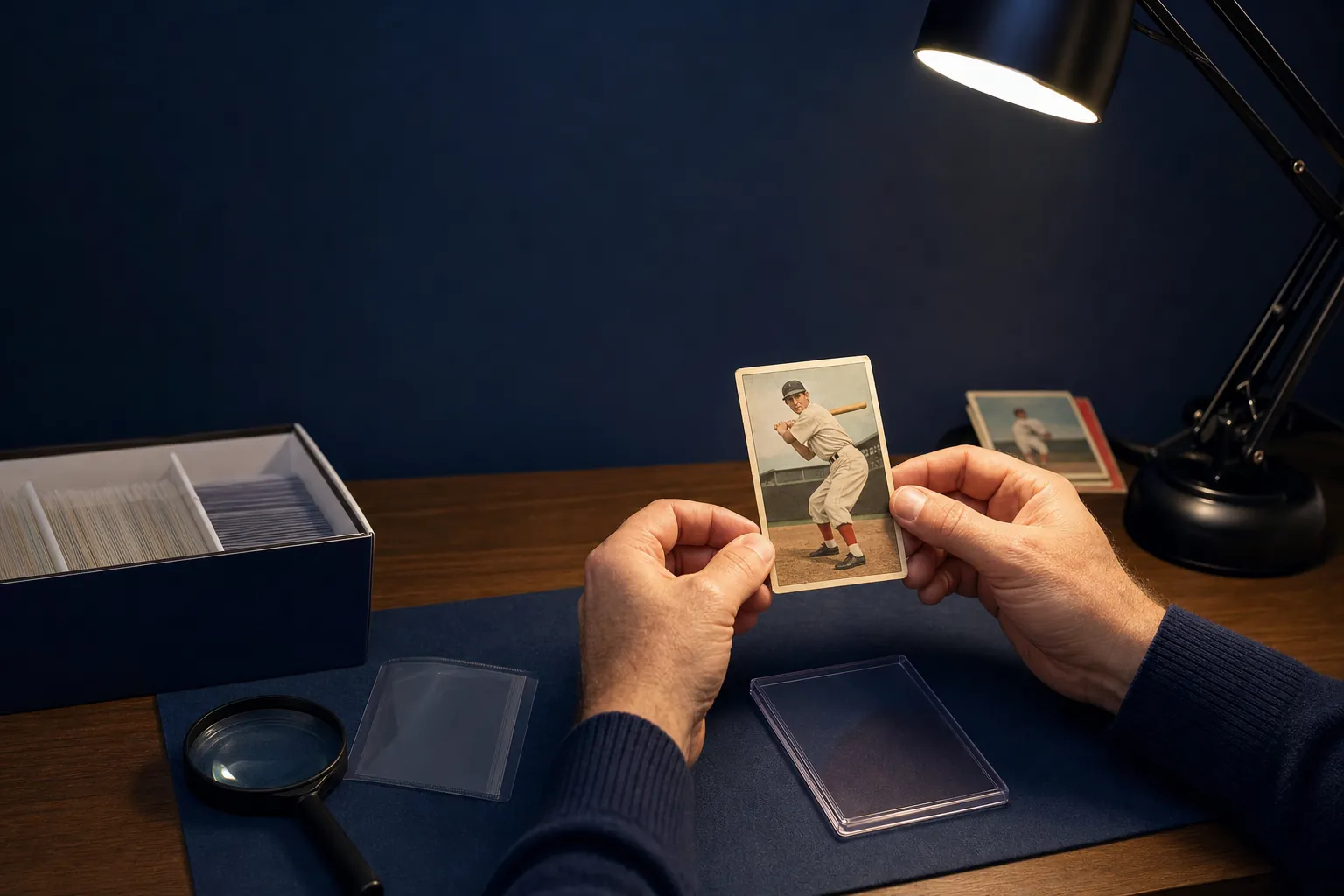
Sports Card Collecting for Beginners: Where to Start
A practical first path for choosing what to collect, buying carefully, protecting cards, and enjoying the hobby on your own terms.
Read The Guide